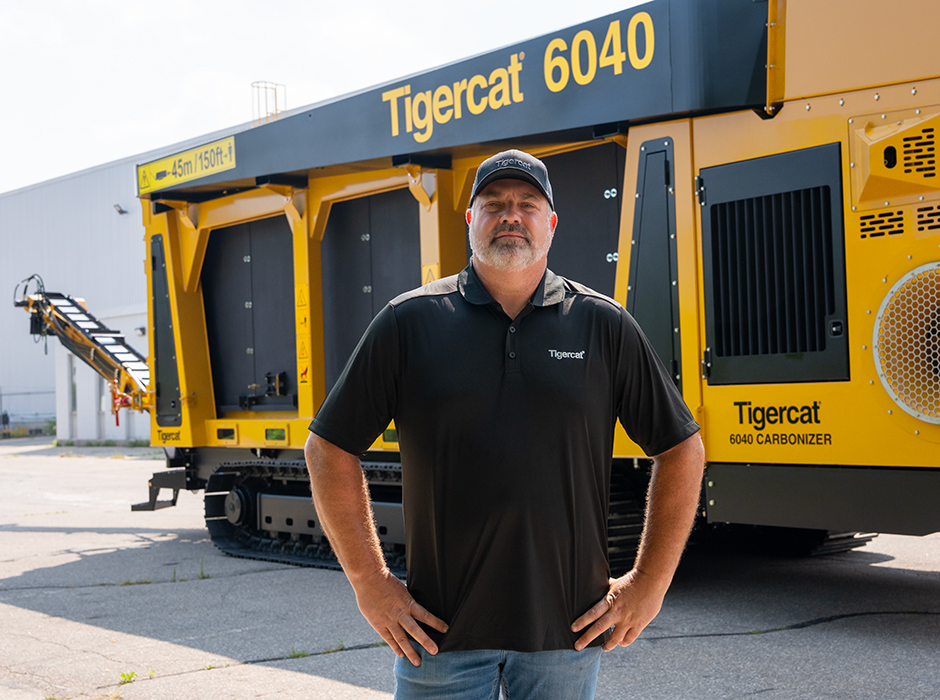
Carbonizer Product Specialist, Matt O’Connor provides an update on permitting progress in the United States for the innovative 6040 carbonizer.
KEY POINTS
EPA considers forest debris feedstock to be a process ingredient for producing biochar, not discarded material
The 6040 is not regulated as an Other Solid Waste Incineration (OSWI) unit under CAA Section 129 and does not require a Title V operating permit for clean wood biochar production
The 6040 is not classified as a stationary source under Clean Air Act Section 111 and therefore is exempt from stationary-source-specific requirements under Section 111
The 6040 is exempt from the Commercial and Industrial Solid Waste Incineration (CISWI) rules (under CAA Section 129 and 40 CFR Part 60, Subparts CCCC and DDDD), which apply to units that combust solid waste at commercial/industrial facilities
Several successful pilot projects in California
Straightforward permitting pathways developing in Virginia, Pennsylvania, North Carolina, Florida, Texas and Oregon
Tigercat permit assistance team guides prospective customers through the permitting process
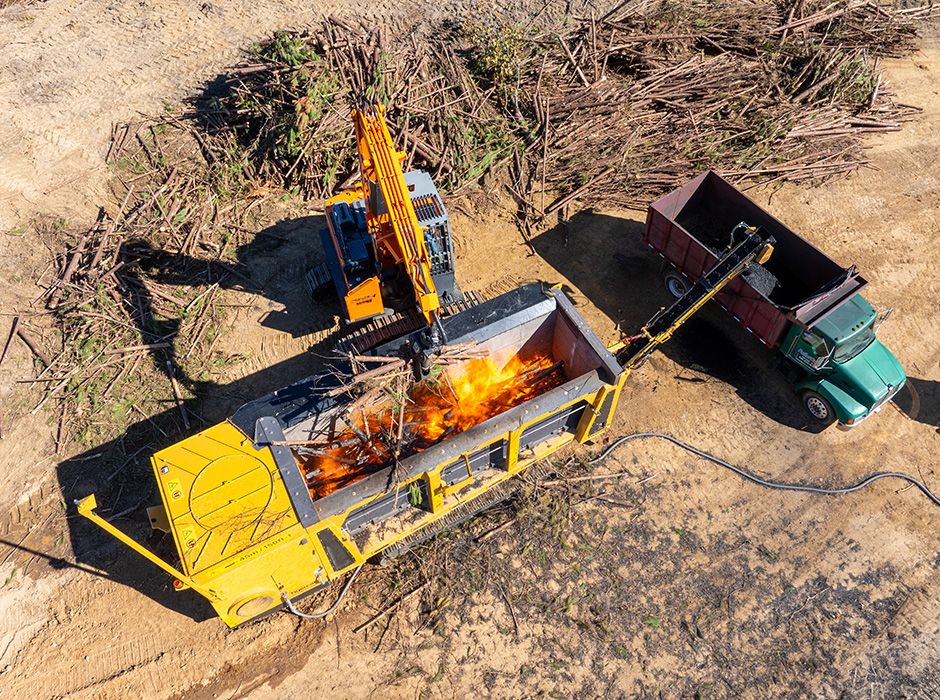
The Tigercat 6040 carbonizer is a mobile, track-mounted unit that transforms woody debris into high-quality biochar onsite. It reduces volume by 90% and sequesters 20-30% of the available carbon in the feedstock, while slashing emissions by up to 98% compared to traditional processes.
Breakthrough technology should be effective and easy to deploy. When Tigercat Industries introduced this mobile carbonizing solution, it entered a space with no established regulatory framework. Recognizing that customers need confidence before investing in new equipment, we made a deliberate decision: work together with regulators from day one to build clear, repeatable permitting pathways.
Following, is a summary of what we’ve accomplished to date with the US Environmental Protection Agency (EPA) and state agencies — and how it creates real peace of mind for future 6040 owners.
Defining milestone with the EPA
Early in the process, Tigercat applied to the EPA’s Office of Land and Emergency Management for a non-applicability determination under the Clean Air Act (CAA). The key question was straightforward: When the 6040 processes clean, untreated cellulosic biomass (such as forest residues or clean wood debris) to produce biochar, is the wood considered solid waste or a process ingredient?
The EPA’s favourable response was clear: the feedstock is treated as a process ingredient, not discarded material. This determination means the 6040 is not regulated as an Other Solid Waste Incineration (OSWI) unit under CAA Section 129 and does not require a Title V operating permit for clean wood biochar production (provided no other Title V triggers apply).
Key to simplifying the permitting process for the Tigercat 6040 in the US is recognition by government agencies that the wood debris feedstock is a process ingredient, that the process generates very low emissions, and that the 6040 produces a useful product.
Additionally, because the 6040 is a self-propelled, track-mounted vehicle designed for mobility across off road terrain, it is not classified as a stationary source under Clean Air Act Section 111 (which defines stationary sources as buildings, structures, facilities, or installations that emit or may emit air pollutants). Section 111 focuses on New Source Performance Standards (NSPS) for stationary sources. The unit's mobility and non-stationary nature further support its exemption from stationary-source-specific requirements under Section 111, aligning with the EPA's distinction between stationary sources and mobile/non-road sources regulated (if applicable) under other CAA titles.
Exemption from CISWI rules
The 6040 is also exempt from the Commercial and Industrial Solid Waste Incineration (CISWI) rules (under CAA Section 129 and 40 CFR Part 60, Subparts CCCC and DDDD), which apply to units that combust solid waste at commercial or industrial facilities. By treating clean cellulosic biomass as a process ingredient for biochar production (rather than solid waste), the EPA has confirmed that the unit does not fall under CISWI applicability. This aligns with EPA guidance on clean cellulosic biomass used in pyrolysis processes: when the feedstock is clean (no contaminants beyond levels typical of virgin biomass) and the output is a beneficial product like biochar, the process is not considered solid waste incineration. This exemption avoids the stricter emission limits, monitoring, and permitting burdens associated with CISWI units, further simplifying deployment for mobile, low-emission systems like the 6040.
This combined ruling delivers multiple practical benefits:
Significantly lower permitting complexity and administrative burden
Avoidance of stricter incineration standards under Sections 129 and 111, including OSWI, CISWI, and NSPS
Legal recognition of beneficial reuse instead of waste disposal
Stronger foundation for carbon credit eligibility
We followed up by requesting additional guidance to promote consistency across EPA regions and delegated state programs, helping lay the groundwork for a more uniform national approach. Comprehensive Tigercat Industries funded source testing has also established reliable emission factors for particulate matter, black carbon, and CO₂, giving operators and regulators the data required for straightforward compliance.
Success in California
Theory is important, but real deployments prove the path works. In California — one of the most active wildfire-prevention landscapes — we’ve completed successful pilots in Tehama, Lake, and Nevada counties using only clean feedstocks. Regulators have responded positively, with minimal scrutiny under 40 CFR 241.3 and quick California Environmental Quality Act (CEQA) categorical exemptions (Classes 4 and 7) due to the minimal environmental impact of the 6040.
Notable highlights include:
A twelve-month pilot at the Middletown Wastewater Treatment Plant in Lake County
An efficiently processed permit in Nevada County for extended operations at La Barr Meadows
In early 2026, Earth Foundries partnered with Falk Forestry to process fire-damaged timber from the August Complex Fire in the Mendocino National Forest, which borders Tehama County. This project serves as a model for modern forest restoration, keeping organic material local while reducing long-term wildfire risk
Matt O’Connor, Carbonizer Product Specialist
Progress in other states
In Virginia and Pennsylvania, clean wood operations typically require no additional permits outside nonattainment zones (nonattainment zone is an area that does not meet National Ambient Air Quality Standards for air pollutants)
Straightforward initial operating permits from the Department of Environmental Quality (DEQ) at reasonable cost in Oregon. A notable example includes Tioga Logging's successful operations, which helped demonstrate the unit's low-impact performance and contributed to the issuance of a general permit by Oregon DEQ for qualifying mobile biochar production systems like the 6040 — further streamlining approvals for similar deployments statewide
North Carolina, Florida, and Texas are following a similar path to Oregon, with deployments (including municipal collection sites in North Carolina, and ongoing operations in Florida and Texas) showing straightforward permitting for clean wood processing. Site-specific reviews have aligned with the EPA’s non-waste determination, enabling efficient approvals focused on low-emission, beneficial-use applications without heavy OSWI or CISWI burdens
Streamlining for the future
As Tigercat Industries delivers more 6040 units across the country, it is actively collaborating with state environmental agencies to develop or qualify for general permits specifically designed for mobile carbonizers and to create templated permitting approaches tailored to each state, drawing on lessons from early pilots to build repeatable, predictable frameworks.
Tigercat’s dedicated permit assistance team provides hands-on support — reviewing site plans, preparing documentation, and coordinating with local air districts and regulators so customers can focus on operations rather than paperwork.
These efforts aim to reduce variability from one jurisdiction to another and shorten approval timelines for operators. In parallel, Tigercat’s dedicated permit assistance team provides hands-on support — reviewing site plans, preparing documentation, and coordinating with local air districts and regulators so customers can focus on operations rather than paperwork.
For those pursuing carbon credits, the assistance team guides operators toward simple, third-party monitoring, reporting, and verification protocols that turn environmental performance into additional revenue.
Confidence for every customer
The permitting landscape for any truly innovative technology can feel uncertain at first. That’s why Tigercat has invested significant time and resources into proactive engagement with the EPA and states — not just to meet requirements, but to shape clearer, more supportive pathways.
Today, the message to prospective buyers is simple and reassuring. The regulatory groundwork has been laid. The EPA’s key determination is in place, including non-applicability under Sections 129 and 111 and exemption from CISWI rules. Several carbonizer operators have proven pilot successes on record with expanding operations in North Carolina, Florida, and Texas, and general permit progress in Oregon. Tigercat is engaged in ongoing work to standardize processes state by state.
Tigercat Industries and the Tigercat-TCi dealer network are here to support you every step of the way. If you’re considering a 6040 carbonizer for your operation, contact your nearest dealer to start a discussion on your location, planned use, and how our permitting experience can help make deployment smooth and successful.