Based in central Massachusetts, Pirner Logging blends decades of experience with a commitment to continuous improvement. Led by Chris Pirner alongside his son Jacob, and veteran operator David Balchunas, the company focuses on core values of quality work, strong relationships, and responsible forestry.
— Samantha Paul
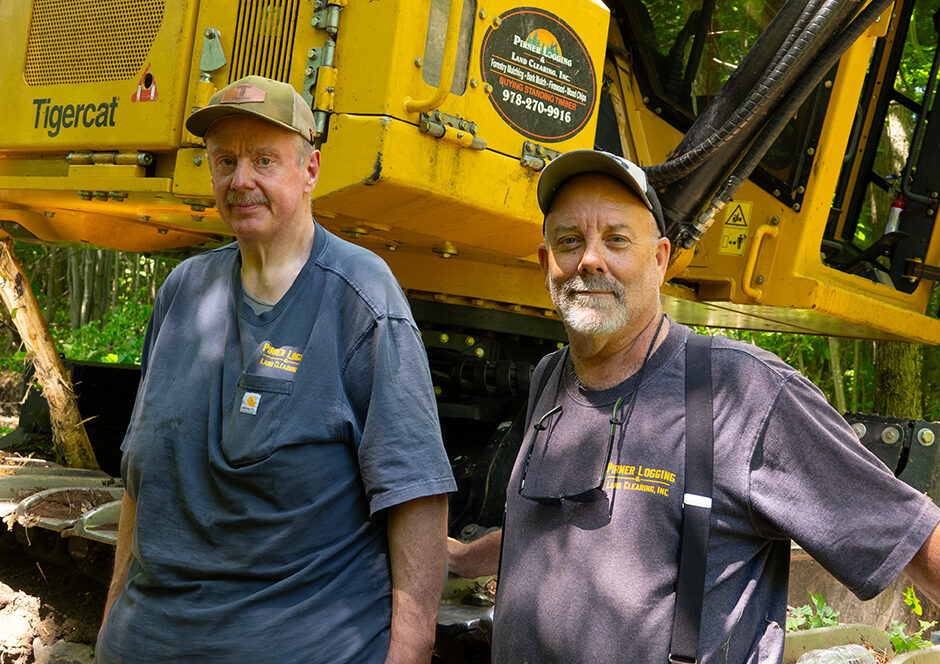
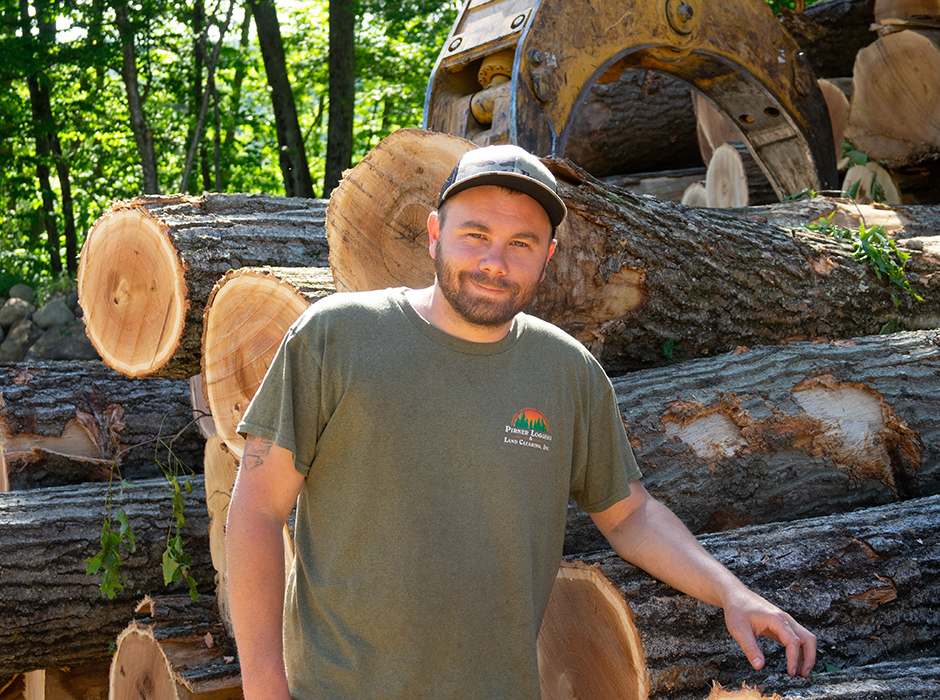
Chris Pirner (right) and longtime operator David Balchunas (left) have worked together for more than 40 years.
For Chris Pirner, a successful logging business isn’t built overnight. It’s built one day, one job, and one decision at a time. “We started out with just a cable skidder and a chainsaw,” he says. There was no outline for success; just long days in the woods, cutting timber, hauling wood, and learning through experience. As the operation grew, so did the equipment fleet, but the core values remained the same — hard work and a commitment to doing the job right.
Chris and long-time operator David Balchunas have worked together for more than four decades. David was the first employee Chris ever hired, and over the years their working relationship evolved into a friendship built on trust and mutual respect.
The rhythm of the work
In the early days, the work followed a familiar rhythm. By midday, trees would be down and stacked. Lunch was spent measuring, marking, and processing wood. Then it was back to cutting until the day was done. “It was repetitive, physical work, but we had a really good system,” Chris says. “You didn’t have to do a whole lot of talking. You just knew what the other guy was going to do.” That instinctive teamwork, the ability to work without words, is something they both still value today.
For David, logging was a way of life he grew up with. “My father was a logger,” he recalls. “You’d ride in the truck with him, carry his gas and oil. It got in your blood.” As a kid, he learned by watching and listening. Over the years, he’s operated nearly every type of equipment. When asked what separates a good operator from a great one, he points to vision.
“When you’re cutting, you have to have a vision,” David says. “You have to see what you want it to look like before you even start.” It’s a skill that only comes with experience. Long before the first tree hits the ground, David is already thinking about the finished job — what stays, what goes, and how the stand will look when the work is complete. “Ask any experienced logger and they’ll tell you there’s a rhythm to the work,” he adds. Movements become second nature. “I shut my mind off and just cut wood,” he says.
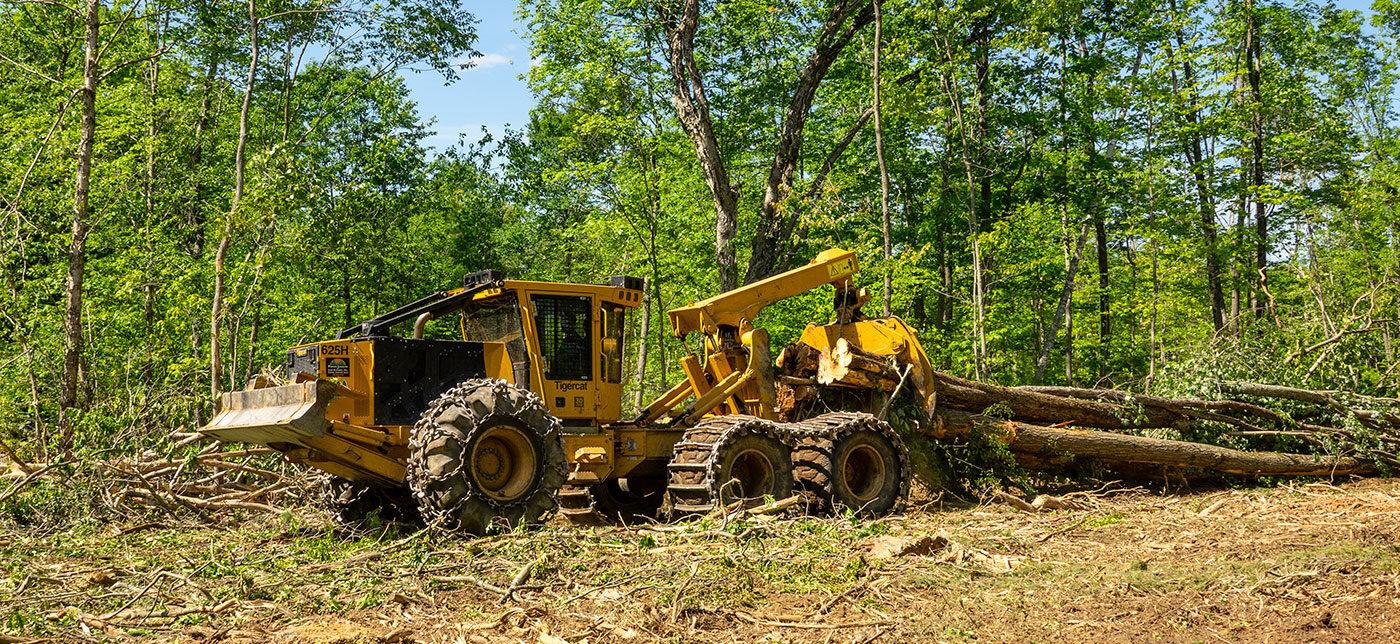
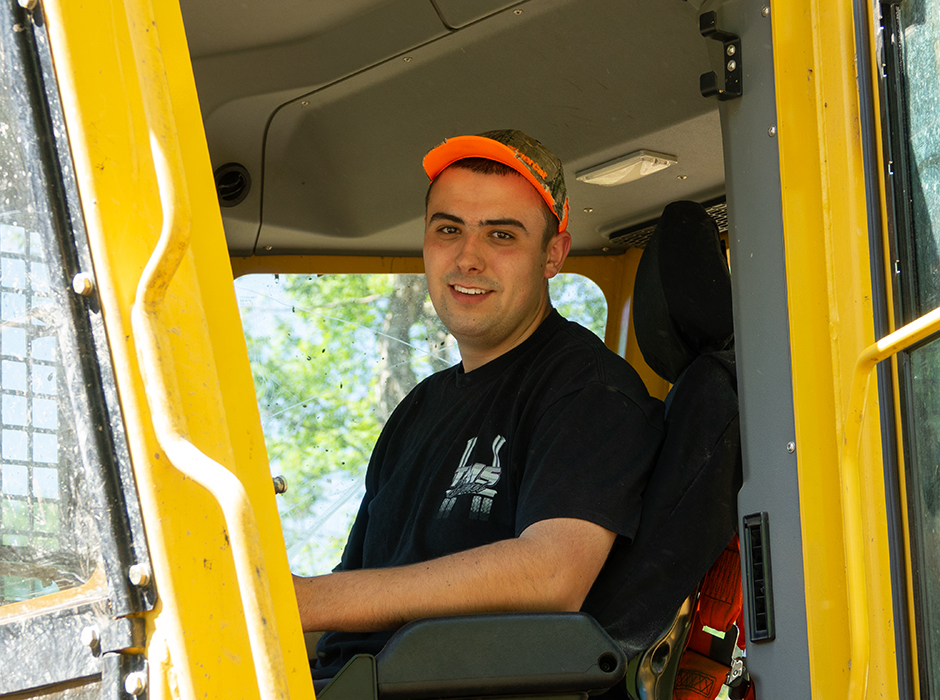
The 625H skidder is the first Tigercat machine purchased by Pirner Logging.
From green to yellow
For decades, Pirner Logging ran John Deere equipment. But over the past several years, the company has gradually transitioned its fleet to Tigercat, driven by machine performance and durability, dealer support, and long-term value.
The shift began with a Tigercat 625 six-wheel skidder in 2022. At the time, Pirner Logging was battling wet ground conditions that had conventional four-wheel skidders struggling to stay productive. “The place where the four-wheel skidder was getting stuck, that bogie skidder just kept going,” Chris recalls. “They doubled every hitch and pulled it out.”
That machine quickly proved its worth, allowing the crew to finish jobs that would otherwise have been very difficult to complete efficiently. This opened the door to additional Tigercat purchases, including an LX830E feller buncher, a 632H skidder, and most recently, a 250E loader. Today, nearly the entire fleet carries the Tigercat name.
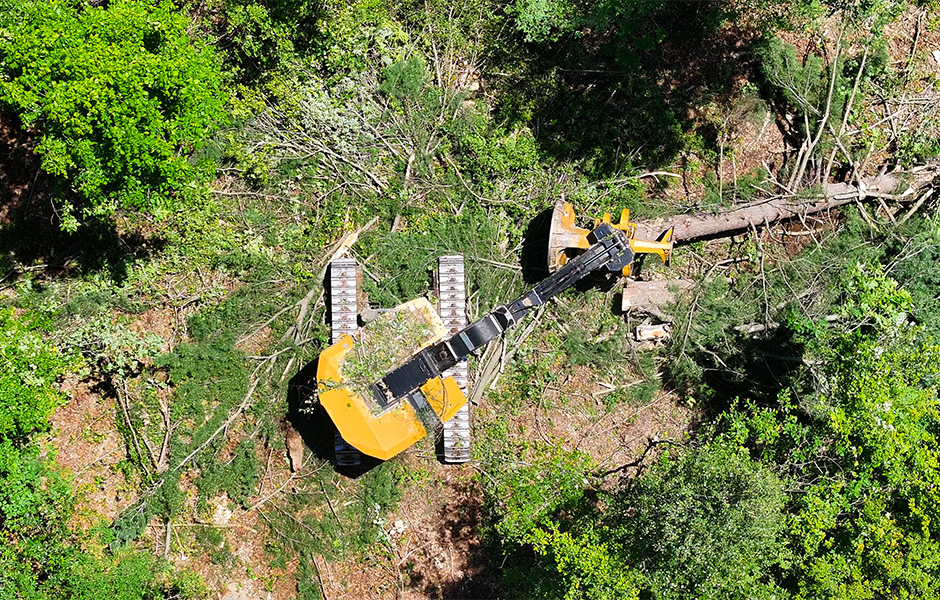
David Balchunas at work in the Tigercat LX830E.
David spent much of his career in Deere equipment and openly admits he previously “bled green.” The LX830E changed his perspective. “The stability on this machine is incredible,” he says. “When you can go on steep hills and you’re level and reaching off to the side cutting wood, you feel perfectly fine. This machine is amazing.” What impressed him most wasn’t just the machine’s performance, but the fact that it felt purpose-built for the realities of logging. “They must have talked to loggers and paid attention,” David says. “These things are tough, tough, tough. They hold up.”
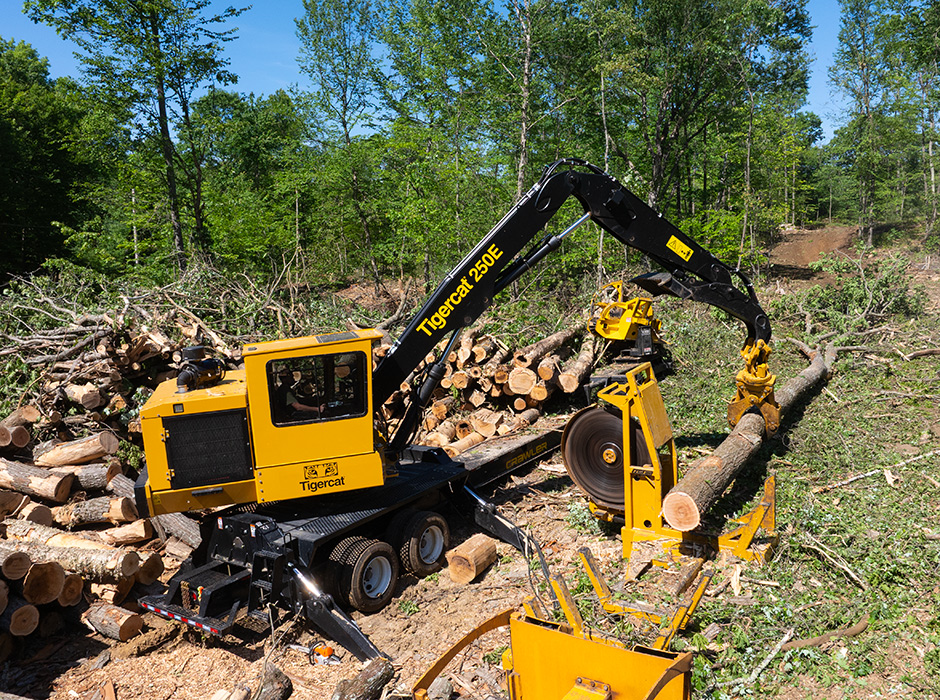
At the landing, Chris’s son Jacob operates the newest addition, a Tigercat 250E loader. The company was looking for a stronger, more durable machine capable of handling the large wood normally encountered in the harvesting operations. Jacob was a driving force behind the decision to add the 250E to the fleet. After years running competing loaders, he immediately noticed the difference. “It’s a lot stronger, a lot faster, a lot smoother, and a lot more heavily built,” he says. “It’s definitely a rugged, heavy-duty machine.” As the primary operator, Jacob appreciates the design and serviceability. “Everything about it is good. There is a lot of room to work on it. Under the motor compartment, everything’s easy.”
Pirner Logging’s newest addition, a Tigercat 250E loader.
Jacob has earned a reputation for being direct, honest, and unafraid to speak his mind. When something isn’t working, he is quick to point it out and rarely lets flaws go unmentioned. As Chris puts it with a laugh, “If he doesn’t like something, he’ll tell you.” That made his reaction to the new Tigercat 250E particularly telling. While Jacob’s straightforward approach can be demanding, it has also helped drive continuous improvement throughout the operation. Whether evaluating equipment, refining processes, or challenging conventional thinking, he is always looking for a better way to get the job done.
They must have talked to loggers and paid attention,” David says. “These things are tough, tough, tough. They hold up.
— David Balchunas
The confidence in Tigercat extends beyond the machines themselves. A visit to the company's manufacturing facilities gave them an inside look at how the equipment is built and reinforced their belief in the brand. The customer-first culture was evident. Meeting product engineers and company founder Ken MacDonald reinforced that customer feedback is genuinely valued throughout the organization. “When we went on the tour and Ken MacDonald was the way he was, that told me right there this is the company we want to do business with,” Chris says. “If you ask him a question, he listens and takes it seriously.”
Answer your phone
Just as important as the equipment itself is the support standing behind it when the workday doesn’t go as planned. That support has come through a longstanding relationship with CJ Logging Equipment and specifically salesman George Wheldon. With decades of experience in the forestry industry, George understands the realities of logging and has earned the trust of the Pirner crew by remaining accessible, knowledgeable, and committed. According to Chris and Jacob, what separates George from many salespeople is his focus on relationships rather than transactions. Whether there’s a machine purchase on the table or not, he makes a point of staying connected and stopping by the jobsite to discuss challenges, share ideas, and see how operations are running.
“They’re just customers that become my friends,” George says. That approach has made him a trusted resource for the Pirners, who frequently rely on his experience to help navigate equipment decisions, market opportunities, and day-to-day operational challenges.
“It doesn’t always have to be about buying something,” Chris comments. “It’s always good to bat ideas around if something new is coming, or if you’re having an issue.” For Chris, responsiveness remains one of the most valuable qualities a dealer can provide. “The biggest thing for me is that George will always answer his phone. If I have a problem and I want it fixed, these guys have always been very responsive.”
Jacob Pirner helps lead the next generation of the family business.
Jacob shares that feeling. “That’s the other reason why we bought a lot of stuff from George. If he doesn’t know the answer, he finds out and gets back to you.” Operating several hours from the dealership location makes that level of commitment especially important. CJ Logging Equipment has kept downtime to a minimum. “Every time we’ve had an issue, they’ve come out and fixed it,” Jacob says. “When something breaks, the parts are usually here the next day.”
The next generation
While Chris built the company, his son Jacob is helping shape its future. Since graduating high school in 2016, Jacob has become increasingly involved in every aspect of the operation, from production planning and wood merchandising to trucking logistics and equipment purchase decisions. At just 28 years of age, he already plays a significant role in guiding the direction of the business.
Skills can be taught, but attitude cannot.
— Chris Pirner
Jacob’s influence is particularly evident when it comes to equipment purchases. He was a strong advocate for the Tigercat LX830E feller buncher, believing the leveling undercarriage and the ability to equip it with the larger 5702-26 felling saw would deliver meaningful productivity gains. “The head on the 822 is smaller. You don't realize how much time you save when you can cut a tree in one pass instead of having to double-cut it,” Jacob explains. (The 5702 is the largest capacity single post felling head available for the 822E.) He also saw value in the leveling capability, pointing to the machine’s tracking performance, power, and ability to stay productive in challenging terrain. After seeing another contractor’s LX830E in action, the decision became easy.
Finding skilled, hardworking operators is just as important as investing in the right equipment. One example is Colton, a nineteen-year-old 625H skidder operator. Unlike many in the industry, he didn’t grow up in a logging family. After watching Pirner Logging work near his home, he developed an interest in forestry and has since become a valued member of the crew. “He shows up every day on time, with a smile on his face, ready to do whatever needs to be done.” For Chris, that’s what matters most. “Skills can be taught, but attitude cannot.”
While Chris and David continue to provide the experience gained from decades in the woods, Jacob is helping carry the business forward. Despite challenges such as rising fuel costs, changing markets, and demanding conditions, the core strategy remains — show up, do the work right, and leave the job better than you found it.