All Tigercat track machines use heavy duty track components that are designed for harsh forest conditions, steep slopes and tough terrain. The key to the longevity of these track systems is proper care and maintenance.
One of the most important items to check regularly is track tension, also referred to as track sag. If the tracks are too loose, there is a possibility they could come off the sprocket. With too much tension, the chains, bushings, and sprockets will wear significantly more quickly. Maintaining proper tension in the track system can increase component life by up to 50%.
The proper tension in the track system depends on the environment in which the machine is working. A machine working in soft, wet and muddy conditions may not need as much tension as a machine working in dry, hard or rocky ground. Generally, the chain tension should be set high enough to prevent the sprocket from jumping. If soil packs into the track system, it will increase track tension. In this case, starting with less tension and checking track sag more frequently is recommended. Check your operator’s manual for the correct parameters.
Safety first
Before performing any work on the track system, park the machine on a firm, level surface as shown in the operator’s manual.
Turn the machine off and install a lockout tag on the battery disconnect switch.
Only use a high-pressure power operated grease gun if you have been appropriately trained to do so. Training should include:
Proper operation of the tool
Safety precautions for using the tool
Hazards of using the tool
Treatment of related injuries
When adjusting the track tension, ensure that you are not positioned in front of, or in line with the grease fitting, fill valve or fill coupler in case they break free from the tensioner.
Measuring track sag
There are two ways to measure track sag depending on whether the undercarriage is equipped with top rollers or top slides.
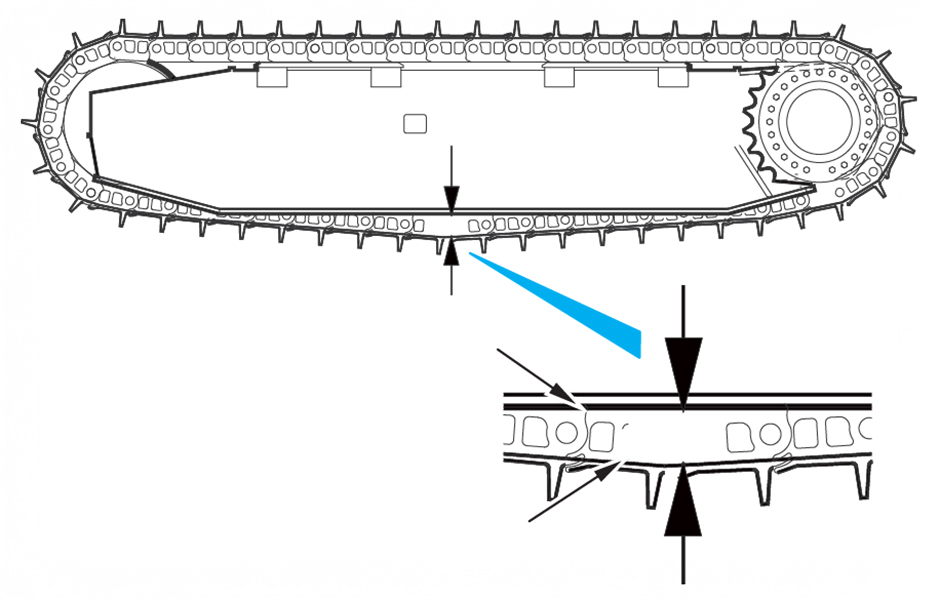
For undercarriages with top slides, the track sag must be measured from the bottom of the undercarriage. Follow the steps in the operator’s manual for safely raising and blocking the undercarriage.
It is best to measure track sag from the bottom of the undercarriage. Measure the distance from the underside of the track guard to the upper surface of the track shoe.
For undercarriages with top rollers, if possible, it is best to measure the track sag from the bottom, the same as with top slides. If not, the sag can be measured between the top rollers by placing a straightedge over the top rollers and measuring the distance between the straightedge and the top of the grouser at an equal distance between rollers.
For both methods, be sure to rotate the track forward and in reverse several times and stop while in reverse, to ensure it isn’t binding on the sprocket. Again, follow all steps and safety precautions listed in the operator’s manual.
Adjusting the track sag consists of adding or removing grease from the idler adjusting cylinder until the proper tension is reached.
There are two idler styles used on Tigercat undercarriages; one uses an installed fill valve and the other uses a fill coupler that attaches to the fill valve.
CAUTION: The grease in the idler is under very high pressure. DO NOT REMOVE the adjustment fitting valve body from the adjusting cylinder.
Adjusting track sag: Fill valve style
To tighten the track:
Connect a grease gun to the grease fitting on the fill valve
Add grease until the sag dimension is within the recommended limit
Remove the grease gun from the fitting
To loosen the track:
Slowly loosen the valve body until grease begins to escape through the relief passage in the valve body (The valve is mechanically restricted from being removed completely)
Grease will be seen escaping around the valve body threads
Continue to remove grease until the sag dimension is within the recommended limit
Tighten the valve body when the track sag is correct
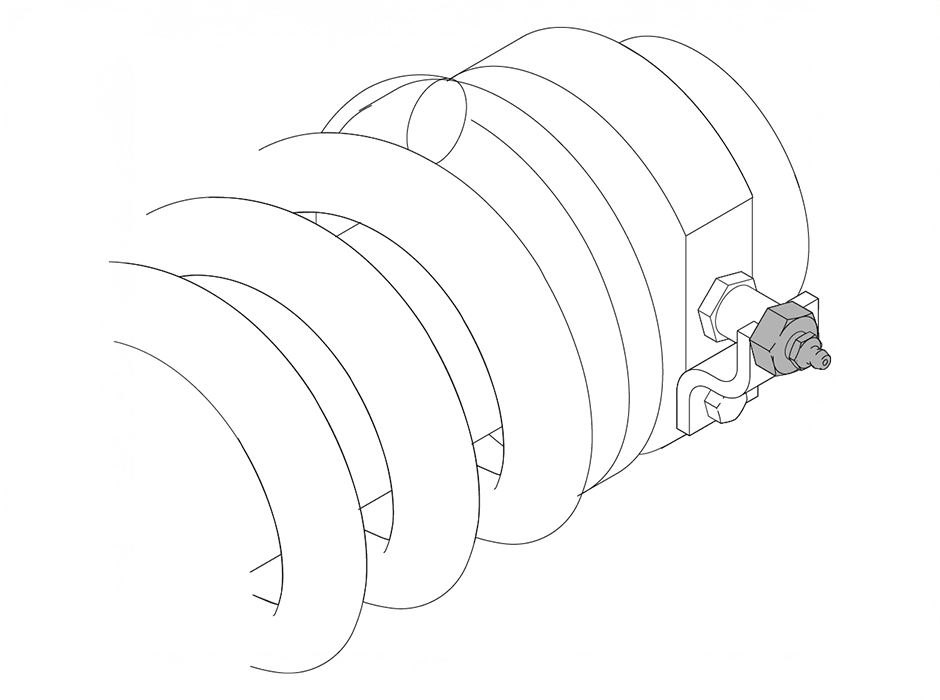
Fill valve style.
Adjusting track sag: Fill coupler style
To tighten the track:
Attach the coupler to the fill valve
Connect a grease gun to the grease fitting on the coupler
Add grease until the sag dimension is within the recommended limit
Remove the grease gun from the coupler fitting
Remove the coupler and store in a safe place
To loosen the track:
Slowly loosen the valve body until grease begins to escape through the relief passage in the valve body (The valve is NOT mechanically restricted from being removed completely)
Grease will be seen escaping around the valve body threads
Continue to remove grease until the sag dimension is within the recommended limit
Tighten the valve body when the track sag is correct
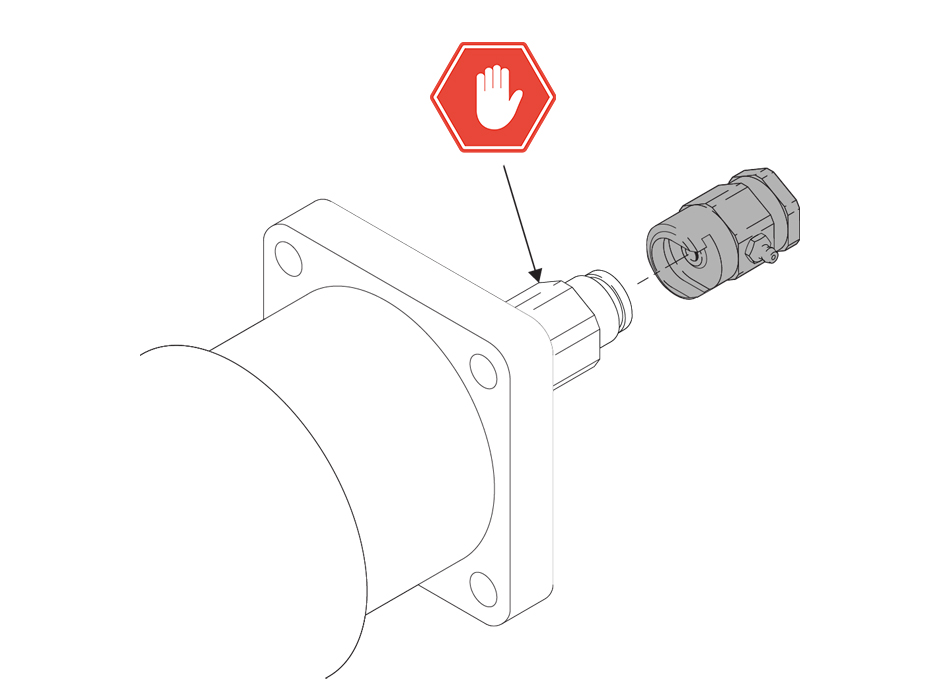
Fill coupler style. Do not remove the valve completely.
Following the maintenance recommendations outlined in the operator’s manual, and regular inspection of the tracks will help to extend the life and efficiency of all related components.
For best performance, always use genuine Tigercat replacement parts.