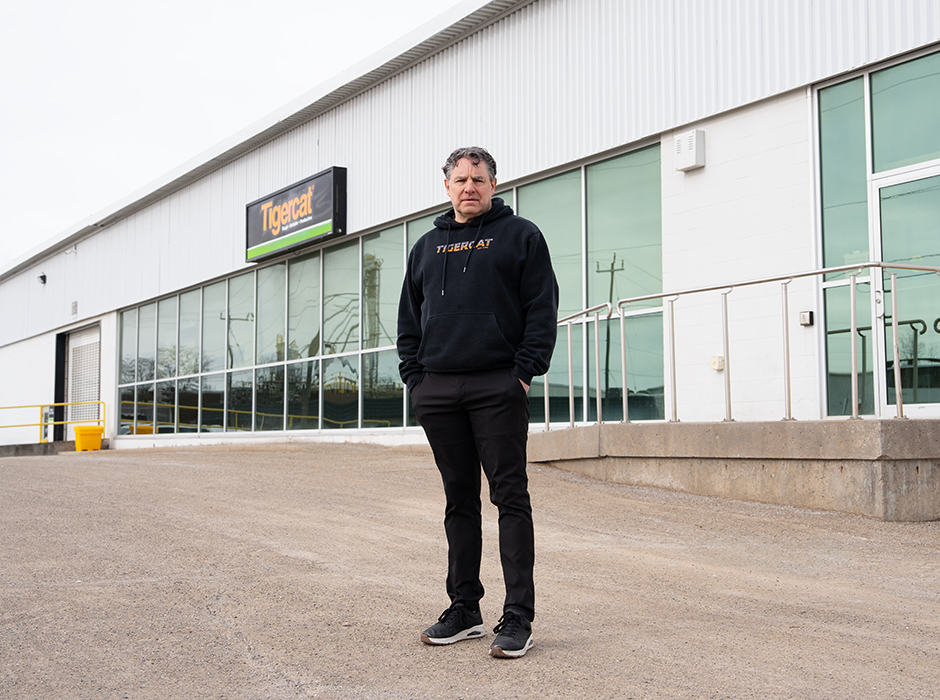
In his ‘What’s Your Job’ series, Chris McMillan talks to Parts Manager, Brian Jonker about the development of the Tigercat parts department over his 30-year career.
Parts Manager, Brian Jonker started with Tigercat in February 1996 working on the shop floor in the cab assembly area. Six months later, he moved into the parts department. At the time, it was a two-person operation and Brian became the third team member.
In early 1997 James Farquhar, the department manager at the time, transferred to the service department, and later moved to Alberta, taking on a district manager role for central Canada. When the parts manager position became vacant, Brian seized the opportunity.
As the department grew, a major challenge was where to locate it. When Brian joined the team, the parts department had just moved from 86 Plant Farm in Brantford to 140 Consolidated Drive in Paris, where it shared space with track machine assembly.
As the operation outgrew that location, a building just up the road at 40 Consolidated Drive was purchased and became the Tigercat head office. The shop portion of the building became the new parts warehouse, and an adjacent office area accommodated the parts, service and warranty teams.
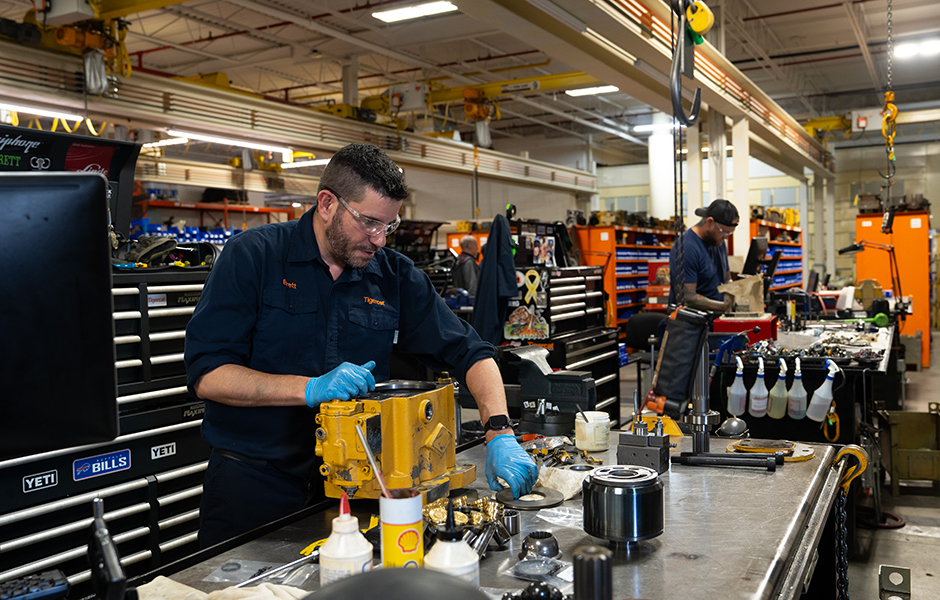
This move also led to the development of the Tigercat rebuild department. A portion of the shop area was dedicated to testing returned components such as pumps, motors and axles, and rebuilding them for resale. The reman program evolved into TEC (Tigercat Exchange Components) and is available to customers in North America.
The component rebuild department is critical, providing failure analysis data that is useful in the ongoing to effort improve overall machine reliability, while providing costs effective replacement parts to end users.
As the parts department continued to expand, it was relocated to 54 Morton Avenue in Brantford. When the building across the street became available, it was purchased as a dedicated parts warehouse and rebuild centre.
Brian comments on the importance of the rebuild centre. “It’s a big part of what we do for many reasons. The team works closely with engineering to help develop and select products, and they are the first line of defence when parts come in for troubleshooting and identifying problems. They also provide a high-quality rebuild product that we can turn around and sell back to our customers at a reduced price from new, with the same warranty as new components.” There are currently fourteen highly skilled technicians working in the rebuild department.
Additional warehouses
With a large machine population concentrated in the southern United States, a building was purchased in 2000 in Vidalia, Georgia to serve as Tigercat’s US warehouse. In 2015, a larger building in nearby Ailey was purchased due to ever increasing parts demand.
“Currently, the Georgia warehouse ships about 85 rush orders a day, which represents roughly 240 line items. We do almost the same amount from here,” says Brian. “The big difference is that we ship many more stock orders from here, as well as all international shipments, so the overall volume is greater than Georgia. But for day-to-day rush items, we ship just as much from there.”
In early 2024, the western US parts warehouse opened in Kelso, Washington. “The Kelso warehouse does about one-third of what the others do. They handle around 25 rush orders a day at roughly 50 line items, and they also ship stock orders for the west coast — both for British Columbia and the US side, including Oregon, Washington and California,” says Brian.
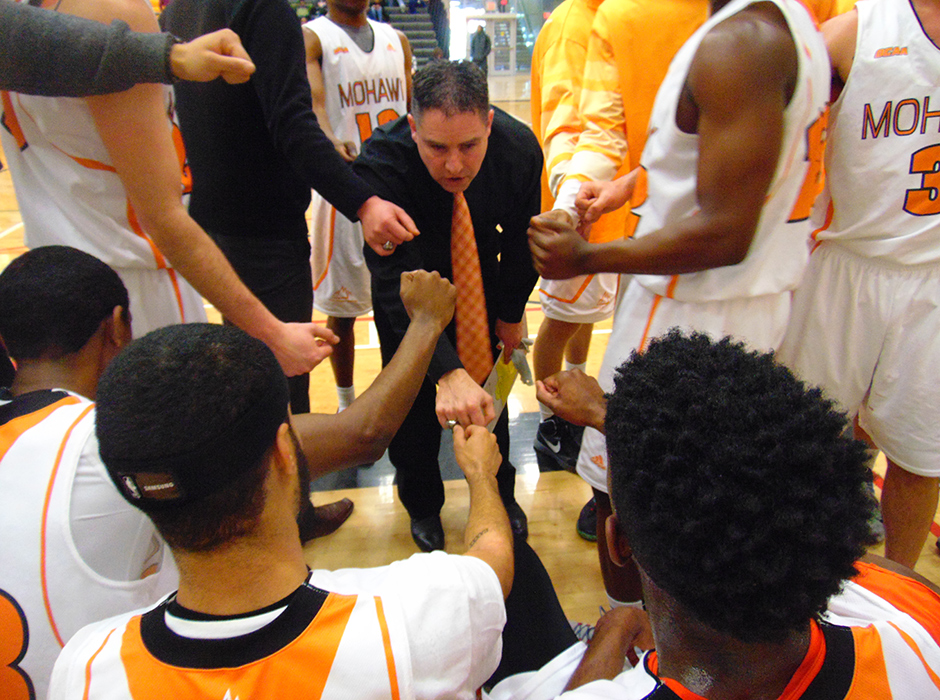
Brian credits his coaching experience as a great asset, helping him to be a more effective leader and manager.
“The growth of the department has been very much relative to the machine population, but the biggest jump we saw was in 2010, when the parts business increased by over 30%. The world had just come out of a major recession where there was a lot of uncertainty about the future. Once things started to normalize, there was an increase in parts sales as customer confidence increased.”
The Tigercat parts department prides itself on getting parts to dealers and customers quickly to minimize machine downtime. Brian notes that the fill rate on rush orders is 90%, with overall fill rates around 86%. “So, nine out of ten items that are supposed to leave the same day do leave the same day,” he explains. “The success of the Tigercat parts business is critical to brand value and key to new machine sales.”
Coaching and managing
Outside of managing the parts department, Brian spent eighteen years as head coach of the Mohawk College Mountaineers basketball team. During his tenure, the team won two Ontario College Athletic Association (OCAA) championships, made three Canadian College Athletic Association appearances, and won one national title. Brian was twice named OCAA West Division Coach of the Year.
Brian says that his coaching experience has been a great asset, helping him to be more effective in his role managing a large and dynamic department. “For a lot of aspects, they’re almost one and the same,” Brian explains. “You must hire or select good people, and I have a pretty good track record of surrounding myself with great people. From there you hope to put them in positions so they can come to work every day with confidence. Hopefully, they enjoy what they do because they know it’s something they’re good at and can succeed at. Most importantly, it’s about the relationships you build within the team. Collaboration, communication, and genuinely getting to know people beyond just what they do at work makes a big difference. It helps build trust, strengthen relationships, and create a tighter team.”